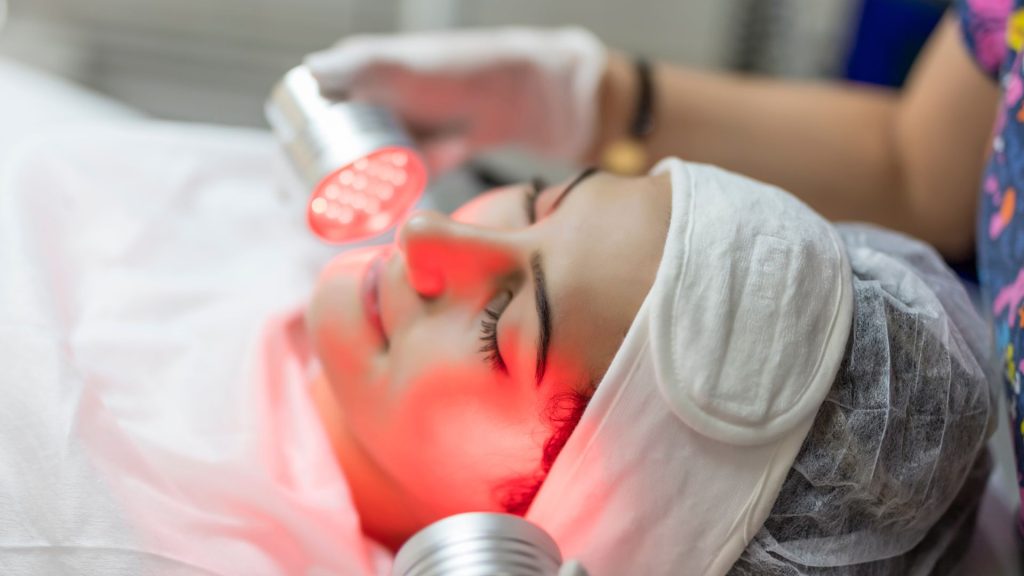
Red light therapy (RLT) is being increasingly talked about in wellness circles — from skincare influencers to serious medical research. But what exactly is it? And does it really work?
What Is Red Light Therapy?
RLT is a non-invasive treatment that uses low-level red or near-infrared light to stimulate cellular function. The light penetrates the skin and is believed to energize mitochondria — the part of the cell responsible for energy production. In theory, this helps the body regenerate tissue more efficiently.
What Is It Used For?
Though still under study, RLT is being explored as a potential therapy for:
- Wrinkles and fine lines
- Acne and acne scars
- Redness and inflammation
- Eczema, rosacea, and psoriasis
- Hair thinning (like androgenic alopecia)
- Skin healing after sun damage or injury
It’s also being promoted for muscle recovery, joint pain, and even mood regulation — though scientific support for those claims is more limited.
What Does the Research Say?
Current studies are small and sometimes lack control groups, but early results are promising — especially for skin health. Medical experts agree: red light therapy shows potential, but more large-scale trials are needed to confirm how effective (and for whom) it really is.
This means RLT isn’t a miracle solution, but it’s not just pseudoscience either. It sits somewhere in the middle — a field with emerging promise, but still under investigation.
Is It Safe?
Generally, yes — when used as directed. RLT doesn’t involve UV radiation, so it doesn’t damage DNA like sun exposure does. However:
- Overuse can irritate skin
- Eye protection is important
- Long-term safety is still being studied
Always consult a medical professional, especially if you’re considering it for a diagnosed condition.
Bottom Line
Red light therapy is an interesting example of how science, wellness, and technology intersect. Whether you’re skeptical or curious, it’s worth following — just make sure to balance enthusiasm with evidence.


0 Comments